The Challenge with Open Mic Crowds…

To get to the point, open mic crowds can be misleading. Just because a joke doesn’t do well at open mic doesn’t mean it’s going to bomb in a paid show. The opposite is true as well. I’ve had bits that barely worked at open mic all spring that ended up working in the shows I headlined this last week. I’ve seen comics kill at open mic and then bomb as an MC or guest set. Take these inconsistencies into account:

  1. It’s too small of a sample audience… With a crowd under 25 people it’s hard to gauge what success sounds like. One table can make a difference in the overall impression it leaves. If that one table laughs, it can trigger others. If they’re not there, the same joke flops in a parallel universe. If you fully believe in the joke, give it multiple reps while you tweak the wording and memorize it better.
  2. Your spot on the list… Being at the beginning or end of the list can dictate how sober/drunk/tired/annoyed your audience is. If you’re working on clean material in a mostly blue show, it’s tough to get the crowd’s mind out of the gutter. If you’re following a string of comics who have all been terrible (or great), it can also distort their reaction (positively or negatively).
  3. Demographics are disproportionate… The audience members who are out at an open mic on a random weeknight are not the bulk of the same audience finally having “date night” on Friday or Saturday. You’re going to get a much younger crowd on weeknights who may sway you into thinking that a carefree, 20-something lifestyle is the norm (ex. bachelor life with an irregular work schedule). As someone who’s been averaging at least one open mic per week from the age of 22 to 48, I can attest that my material in the last decade and a half is less relatable on Tuesday nights than it is for a weekend crowd. That doesn’t mean weekend crowds are “right” necessarily, it just means in my career it’s more important to find material that works for the gigs on my schedule and to discount a “bad” open mic set.

The above are not excuses to skip open mic. You still need to go to get an overall sense of your new material and stay sharp. Odds are there will be nights with your preferred demographic. There will be nights you’re near the front of the list following a clean set and nights you’re near the end following a half hour of blue humor. Don’t get too up or down based on what happens at open mic. If a bit is solid enough almost everyone should at least give you some sort of laugh. It’s important to face tough crowds but not pander to them. Don’t shape your act to mimic the style of the most successful open mic comics or that’s all the farther you’ll ever get. Early success can be harmful anyway.

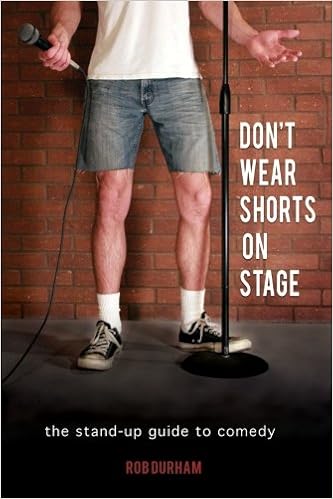
For more advice on how to make money is stand-up comedy, check out my book Don’t Wear Shorts on Stage.
10 Myths about Stand-up Comedy

10. It’s our only job. Almost every comic has some other side hustle to help pay the bills. Substitute teaching, tutoring, driving Uber, commercial work/modeling, voiceovers, or any of the other freelance type of moneymakers are almost always necessary when you’re a comedian. My “side hustle” of substitute teaching turned into my primary career and now my career as a comedian benefits from the constant public speaking and the health insurance.

9. There’s a circuit. This assumptions seems to be mentioned by middle-aged men after every show. People imagine a comedian’s schedule magically appearing like an MLB schedule with gigs lined up in various cities for us. Yes, comics may get help from bookers or managers, but you have to achieve quite a bit of success for that to happen. Most of us work our way into a club in the same way someone gets a new job. You have to know someone, reach out, and if you’re lucky they’ll let you do a short set without pay, and if you do well enough then maybe you’ll get 3 nights there per year.

8. “You can use this in your act.” No. We can’t. It’s a story in context from your perspective. We can’t use your anecdote in our act. Great, your family is crazy, but no one else wants to hear about them. Also, we’re probably just laughing along to be polite.

7. Comedy is a good way to impress the opposite sex. Until they sober up. There aren’t comedy groupies out there like what guitarists might experience. People come to comedy shows on dates, and then they go home. The comedian goes back to his or her hotel alone. Comedy groupies are not the type you want to date either…especially if your comedian buddies work that town too.

6. Touring full-time is the ultimate goal.  This might be true for the first part of your career, but then you get old and tired of traffic and flight delays. Ask a veteran comic and they’ll tell you they’d rather have a writing deal or act on a sitcom. Movies and television syndication is the ultimate goal, not to mention being able to turn down gigs you don’t want to take. When you reach that point, you can still tour, and you don’t even need to be as funny to sell tickets.

5. Comedians only work one hour a night. The ones who do are no longer in clubs. They’re doing the same tired act at bars for much less money. Comedians have to write, revise, listen to their own recordings, attend open mics, promote, organize touring, drive hours and hours, and (see #1).

4. The comedy club feeds you. If you’re working an A room, then yes, you get 1 free meal a night. For the other 20+ hours of the day, you buy your own food. If you’re staying at the comedy club condo, stock up on groceries. If it’s a hotel, take advantage of the free breakfast…and the lobby apples…and the lobby cookies.

3. The gig pays for travel. If only. Until you’re a big-time headliner with a sweet contract, you pay your own way. We drive and pay for our own gas knowing that the profit isn’t much, but it’s an opportunity we answer for some reason. Flying is expensive, and if the show gets canceled, too bad.

2. It doesn’t feel like work. Sometimes it doesn’t. When I’ve done nothing else in the day and the gig is well organized and packed, performing is easy. But after I’ve taught 5 classes a day or driven for hours to a show, I’m tired. There are gigs outside of comedy clubs where it takes every ounce of focus and experience to be successful. While it may look like the comedian is having the time of his or her life, sometimes all the comic is thinking is, “How much longer until this set is over?”

1. Heckling helps comedians be funnier. They might bring a funny moment, but we’d rather not deal with them. First, it’s definitely work. Second, we have our act planned out and a heckler takes away from material that we’ve crafted and find important enough to put in our sets. Third, drunk people shouldn’t be rewarded with attention, nor should they think they deserve any credit ever.

Feel free to share and add any other myths I didn’t mention.

For tips of how to make money in stand-up comedy, check out my book, Don’t Wear Shorts on Stage, on Amazon, Kindle, iTunes, Nook, etc.

8 Tips for Radio Promo

  1. Be awake and have plenty of energy. Give yourself at least an hour to “wake up” before you go on air. Coffee, obviously. Be able to match the enthusiasm in the room or you’ll struggle to get a word in.
  2. Listen to the show on the way there. This allows you to blend in with their style a little easier. See if there’s a topic you can callback. You’ll also learn their names, and hosts respect this.
  3. Be prepared with material. Most deejays will ask you ahead of time if there are topics you want to talk about, so be able to lead the conversation into some of your quick punchlines.
  4. Don’t press the envelope on content. They have much stricter regulations, and if they’re worried about what you’ll say, they’ll wrap up your airtime early.
  5. Ask to play along with whatever games they have. Their listeners love their regular bits, so have fun being a part of them. Add your own touch to it for easy laughs and to stay on the air longer.
  6. Take the initiative to get on the air. Sometimes clubs organize appearances for you, but not always. Send out some emails on your own or use social media to reach out to the on-air personalities. If they can’t fit you on, sometimes they’ll at least plug the show or let you call in. Look up addresses of the stations too. A lot of times they’re all located in the same building, so you can cover a wide variety of listeners.
  7. Plug all your info. Be sure you’re aware of showtimes, promotions, and anything else you can say to attract people to the show. Include your web page and social media handles too.
  8. Send a thank you note and stay in touch. This will help you for next time through. Radio can do wonders for filling the seats.

Radio isn’t just for headliners, clubs will often send the feature too.  Building a following is a great way to get re-booked and move up the ranks.

For more tips on how to make money in stand-up comedy, order my book, Don’t Wear Shorts on Stage. It’s also available in ebook format on Kindle, Nook, iTunes, etc.


Don’t Give Your Show Away…

This whole post was inspired by something that happened this morning. I’ll explain…

There’s an old piece of advice to never turn down stage time. Afterall, a comic starting out should get as much experience as possible, right?  Unfortunately, part of that experience teaches you when not to take the stage.

In 18 years, the worst gigs I’ve ever done were unpaid.  Opening for bands, performing at a conference, opening a meeting…no, no and no.  These are the types of gigs that if you’re going to do, you should charge a ridiculous amount for. They’re extremely challenging and odds are, the audience isn’t expecting a comedy show. When a crowd isn’t expecting OR paying for comedy, your job becomes 10 times harder.

When this happens, you’re doing a disservice to the comedy industry because the next morning all of those people will vent: “…And they had a comedian up there trying to be funny, and it was awful.”

“So many comedians just aren’t funny these days.”

“I know, I think I’ll boycott the local shows forever!”

Perhaps an exaggeration, but in the long run, you’re going to hurt the reputation of that many people’s opinion on live stand-up comedy.

The next part is, once you’re actually a legit comedian who has been paid multiple times for performing, don’t give it away. It’s the same as asking your tattoo artist buddy for a freebie, or some other artisan to give their skill away. It cheapens the industry. The only exception for this is when you’re performing for charity or showcasing for something that might further your career. As a poor comic, it’s nice to be able to donate the only thing that you can sometimes.

As I said, this post was brought on by something I was just asked to do. A colleague at UMSL asked if I could do a session in a teacher workshop this September. I agreed because it’s a day out of my classroom, I can sell books, and I like sharing tips and ideas with fellow teachers. Once approved, she added that I can “wake up the workshop with 25 minutes of my comedy bit” at 8:30 in the morning. 25-year-old Rob would’ve happily agreed, but 40-year-old Rob knows better. This is something I’d charge at least $500 for suffering through and that’s not in their budget. I kindly declined and explained why.

For more tips on how to make money in stand-up comedy, order my book, Don’t Wear Shorts on Stage via Amazon, Kindle, Nook, etc.

frontcover

Why many open mic comics can’t get work

Sometimes I’ll see an open mic comic have a great set with several good jokes.  The next week the same comic has a different five minutes–sometimes better, sometimes worse.  The following week, another completely different set.  I’ve heard it a lot from the newer guys: “I try and write a new five minutes every week.”  Writing and trying out as much material as possible is great, and these comics are probably going to multiple open mic shows per week, but it can be counterproductive.  If several of your jokes or bits work well, keep using them.  Even if a joke “kills” (or the open mic version of “kills”) on its first try, that doesn’t mean it can’t improve.  Yes, sometimes your newest jokes get the best laughs the first time you say them, but let them grow and develop.  Building a great act is all about revision and fine-tuning your material.  If you keep starting from scratch, you’ll never develop a solid set that gets work.

When you repeat a joke over and over, eventually you’ll develop a punchline in the setup too.  You’ll also think of tag lines and transitions into your other jokes.  Memorize the wording so that you can say it in your sleep because when the wording no longer takes any thought on your part, you can focus on which words to stress more, eye contact with the crowd, facial expressions, and all of the other elements and details that expert headliners use.  You can also develop callbacks with your other bits.  This also makes it easier to remember your setlist which is beneficial during a paid show.

I’ve talked to a lot comics about this over the years and they often say, “But I feel like it’s boring for the other comics who have to hear me repeat things.”  That shouldn’t matter.  It’s your career and if you can get out on the road, you’ll constantly be getting a new audience in a different city.  Repeating material doesn’t mean you’re not writing or working to get better.  Take the 2 or 3 bits that do the best and work on revising them until they can’t get any better.  Keep them in your act and build your first MC set.

Comedy is like other forms of writing whether it be songs, books, or essays.  No one produces anything great without revision.  To cite an example, Greg Warren has been coming out to open mic on Tuesdays and working through the same bits for the last month or so.  He’s not trying to write a new 5 minutes every week, but instead, polishing and perfecting the newer bits in his set.

You still have time to try something new in each set, but build a solid foundation first. Club managers look for consistent audience laughter week after week, not a new five minutes.  (And the most common type of revision?  Reducing the wording in the setup.)

To summarize: Find your best punchlines and revise those into tight bits.  Build on them until you get a 7-10 minute set of them where you don’t need a setlist because you’re so familiar with them, and then you’ll be ready to MC and start getting paid.

For other tips on how to make money in stand-up, check out my book, Don’t Wear Shorts on Stage.  It’s also available on Kindle, Nook, iTunes, etc.